

Designing natural collaboration between people, speech technologies, and intelligent systems
For decades, human-computer interaction has largely depended on structured inputs. Users click buttons, navigate menus, fill forms, and learn interfaces designed around the limitations of software systems.
Human communication, however, works differently.
People naturally exchange information through conversation. Questions are asked in different ways. Context evolves throughout an interaction. Meaning is often implied rather than explicitly stated. Speech remains the most intuitive and efficient way for humans to communicate complex ideas.
As artificial intelligence becomes increasingly integrated into operational environments, a new challenge emerges: how can humans interact with AI systems as naturally and effectively as they interact with one another?
This challenge sits at the center of research into Human-AI Speech Interaction.
Beyond voice commands
Many people associate speech interfaces with simple commands.
"Play the next song."
"Set an alarm."
"What's the weather?"
While these interactions demonstrate the usefulness of speech technology, they represent only a small subset of what human-AI collaboration can become.
In operational environments, users rarely need an AI system to execute a single command. Instead, they need systems capable of supporting ongoing tasks, providing information, answering questions, and adapting to changing contexts.
The goal is not simply speech recognition.
The goal is meaningful interaction.
Research increasingly focuses on how speech technologies can support more natural conversations between humans and intelligent systems while maintaining reliability, transparency, and operational control.
Speech as a collaborative interface
Speech offers unique advantages as an interaction modality.
Unlike traditional interfaces, spoken interaction allows users to communicate while focusing on other tasks. It enables faster information exchange and reduces the need to navigate complex software environments.
In many operational settings, speech can become the most efficient way to access information.
Consider a few examples:
An analyst searching thousands of hours of recorded content.
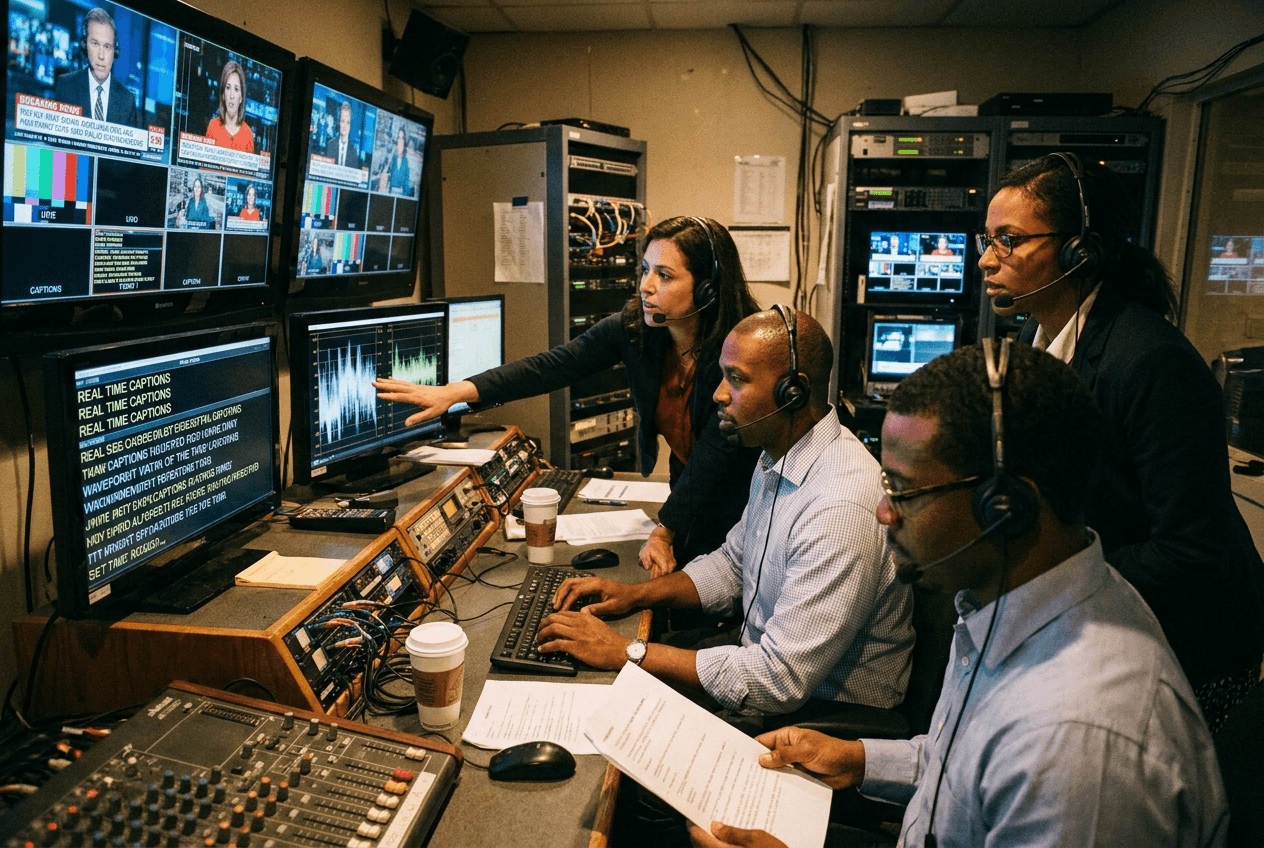
A broadcaster reviewing live content during transmission.
An investigator exploring evidence repositories.
A public institution retrieving information from large document collections.
A contact center supervisor monitoring operational performance.
Rather than navigating multiple systems, users may simply ask:
"Show me all references to this topic from the last month."
"Find the segment where this person was mentioned."
"Summarize the key discussions from today's broadcasts."
The interaction becomes less about operating software and more about accomplishing a task.
Understanding context
One of the greatest challenges in Human-AI Speech Interaction is context.
Human conversations depend heavily on shared understanding.
When people communicate, they rely on previous statements, assumptions, domain knowledge, and situational awareness. AI systems must learn to manage similar forms of contextual information if they are to become effective collaborators.
This requires more than converting speech into text.
Systems must also understand:
User intent
Conversation history
Domain-specific terminology
Task context
Organizational workflows
Relevant information sources
Research in this area explores how speech interfaces can move beyond isolated requests and support continuous, context-aware interactions.
Human oversight remains essential
Despite advances in AI, most operational environments require human judgment.
Organizations operating in media, public sector, security, healthcare, and enterprise environments often need systems that support decision-making rather than automate it entirely.
For this reason, research increasingly emphasizes collaborative AI models.
In these environments, AI systems may:
Retrieve information
Generate summaries
Surface relevant content
Recommend actions
Automate repetitive tasks
Human operators remain responsible for validation, interpretation, and final decisions.
This approach is often described as Human-in-the-Loop AI, where technology augments expertise rather than replacing it.
Speech becomes a natural bridge between human decision-makers and intelligent systems.
From interfaces to assistants
Traditional software applications require users to learn how the system works.
Emerging AI systems are increasingly expected to adapt to how people work.
This shift is driving the evolution of speech technologies from passive transcription tools toward active operational assistants.
Future systems may help users:
Discover information
Searching large collections through conversational queries.
Monitor operations
Receiving spoken alerts and summaries from live workflows.
Manage content
Interacting directly with media archives, recordings, and knowledge repositories.
Support investigations
Exploring evidence and intelligence data through natural dialogue.
Automate workflows
Initiating operational processes through conversational interactions.
In each case, speech serves as both an input mechanism and a method for presenting information back to the user.
Challenges for operational environments
Building effective Human-AI Speech Interaction systems requires balancing usability with reliability.
Organizations must address challenges such as:
Recognition accuracy
Domain adaptation
Multilingual support
Security and privacy requirements
Explainability and trust
Integration with existing workflows
Human oversight and accountability
Research increasingly focuses on ensuring that conversational systems remain useful and dependable in environments where errors may have operational consequences.
The objective is not to create human-like AI.
The objective is to create systems that enable humans to work more effectively.
Looking ahead
As speech recognition, language technologies, and generative AI continue to evolve, speech is becoming more than a method for entering commands. It is becoming a primary interface for interacting with information systems.
The future of Human-AI Speech Interaction lies in creating collaborative environments where users can access information, manage workflows, and engage with complex systems through natural conversation.
For organizations that depend on spoken information, this shift has the potential to simplify access to knowledge, improve operational efficiency, and create more intuitive ways of working with increasingly sophisticated AI technologies.
The challenge ahead is not simply teaching machines to understand speech. It is designing interactions that allow people and AI systems to work together effectively, transparently, and with confidence.
← Back to all articles



Operational speech workflows require different approaches
Discuss transcription, monitoring, accessibility, or conversational analysis requirements with the VoiceInteraction team.