Foundations
6 min read
Published
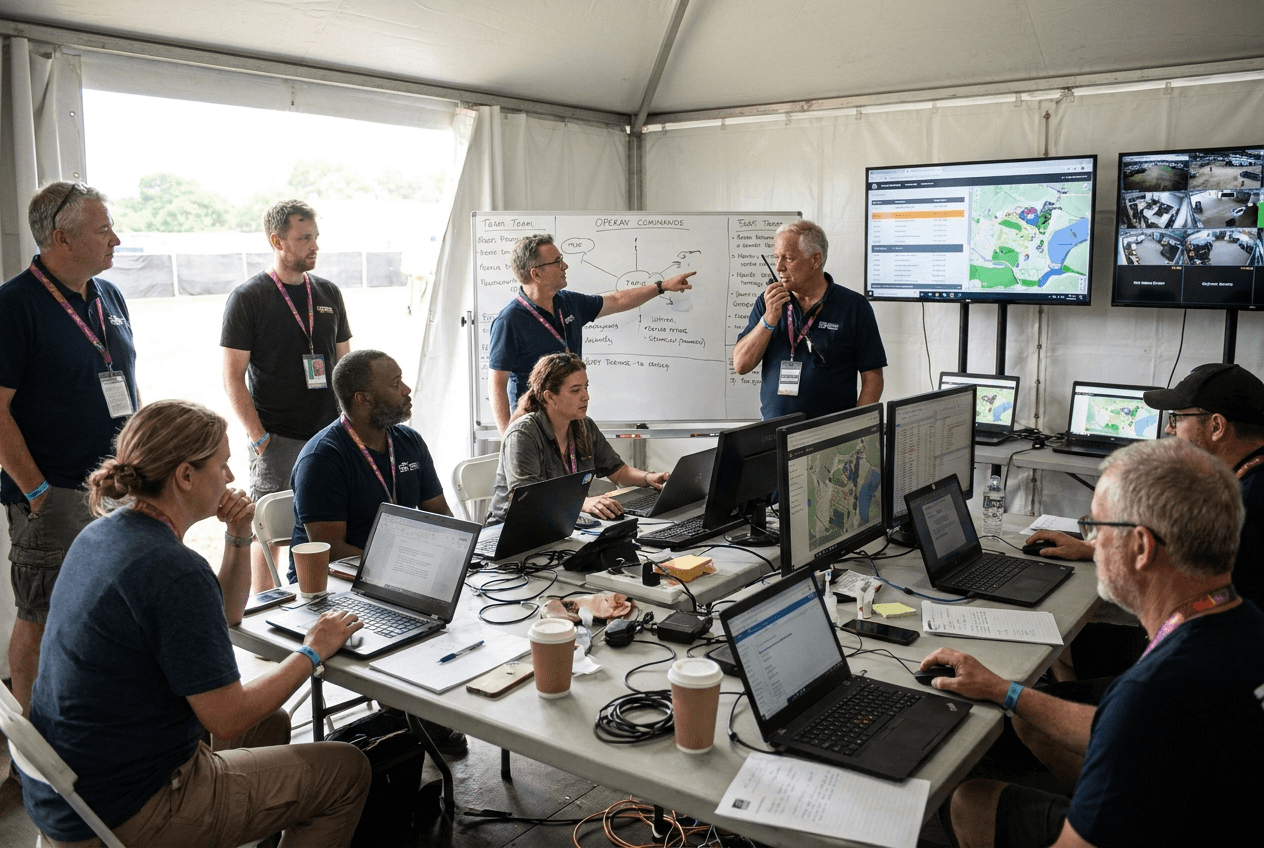
Organizations increasingly operate in environments where information is distributed across multiple sources simultaneously. Conversations, video feeds, documents, metadata, communications systems, and digital records all contribute pieces of a broader operational picture.

By
VoiceInteraction Engineering Team
Combining speech, video, metadata, and contextual information to improve operational understanding
Organizations increasingly operate in environments where information is distributed across multiple sources simultaneously. Conversations, video feeds, documents, metadata, communications systems, and digital records all contribute pieces of a broader operational picture.
Yet many systems continue to process these information streams independently.
Speech recognition analyzes audio. Video analytics processes images. Databases store metadata. Human operators are left responsible for connecting the dots.
As information volumes continue to grow, this fragmented approach becomes increasingly difficult to sustain. The challenge is no longer collecting information. The challenge is understanding relationships across multiple sources in a way that supports timely decisions.
This is where multimodal situational awareness is emerging as a critical area of research and development.
Moving beyond single-source analysis
Most information technologies were originally designed to process one type of input at a time.
A speech recognition system converts audio into text.
A video analytics platform identifies objects or scenes.
A metadata repository stores structured information.
Individually, each system provides valuable insights. Together, they can provide context.
Situational awareness improves when information from multiple modalities is analyzed collectively rather than independently.
For example:
A spoken reference can be linked to a specific person appearing on screen.
A broadcast discussion can be connected to graphics displayed during a segment.
Operational communications can be correlated with events occurring at a particular time and location.
Video archives can be searched using a combination of spoken content, visual elements, and metadata.
The result is a richer understanding of events than any individual source could provide alone.
Why context matters
Information rarely exists in isolation.
A sentence spoken during a meeting may have different meaning depending on who said it, what documents were being discussed, or what events were unfolding at that moment.
Similarly, a television news segment is not simply a stream of words. It includes:
Spoken commentary
On-screen graphics
Video footage
Program metadata
Editorial context
Historical references
Understanding content requires understanding the relationships between these elements.
Research in multimodal systems focuses on how these different layers of information can be combined to create a more complete operational picture.
Rather than treating speech, video, and metadata as separate datasets, multimodal approaches seek to transform them into interconnected knowledge sources.
Speech as a primary information layer
While multimodal systems incorporate many types of data, speech often serves as one of the most information-rich sources available.
People explain decisions through speech.
Broadcasters describe events through speech.
Investigators discuss findings through speech.
Operators coordinate activities through speech.
Speech frequently provides the narrative layer that connects other information sources.
For this reason, speech recognition and language technologies often act as foundational components within multimodal systems. Once spoken content becomes searchable and structured, it can be linked to video, documents, images, locations, and operational metadata.
This enables organizations to move beyond isolated information repositories toward integrated knowledge environments.
Multimodal situational awareness is becoming increasingly relevant across a range of operational environments:
Applications across industries
Media and Broadcast
Combining speech, video analysis, on-screen text recognition, and metadata to support content discovery, monitoring, clipping, and archive management.
Law Enforcement and Security
Correlating communications, documents, multimedia evidence, and operational records to improve investigative workflows.
Cultural Heritage and Archives
Connecting audiovisual collections with transcripts, descriptive metadata, and historical records to improve accessibility and discovery.
Public Sector Operations
Supporting information retrieval, meeting documentation, citizen services, and institutional knowledge management.
Enterprise Intelligence
Transforming communications, recordings, reports, and operational systems into searchable organizational knowledge.
The challenge of integration
Building effective multimodal systems involves more than connecting multiple technologies.
Organizations must address challenges such as:
Data interoperability
Metadata consistency
Information quality
Real-time processing requirements
Privacy and security constraints
User trust and transparency
Research increasingly focuses on how multimodal systems can operate reliably in real-world environments while remaining understandable and useful for human operators.
The objective is not to replace decision-makers, but to provide them with a more complete view of the information available.
From information overload to operational awareness
The growth of digital content has made information abundance a reality across nearly every sector.
The organizations that gain the most value from their data will not necessarily be those that collect the most information. They will be those that can connect information across multiple sources and transform it into operational understanding.
Multimodal situational awareness represents an important step toward that goal.
By combining speech, audio, video, metadata, and contextual information into unified workflows, organizations can move beyond isolated analysis and toward a more comprehensive understanding of events, content, and operations.
As speech technologies, AI systems, and multimedia analytics continue to evolve, multimodal approaches are expected to play an increasingly important role in helping organizations transform information into actionable knowledge.
← Back to all articles



Operational speech workflows require different approaches
Discuss transcription, monitoring, accessibility, or conversational analysis requirements with the VoiceInteraction team.